


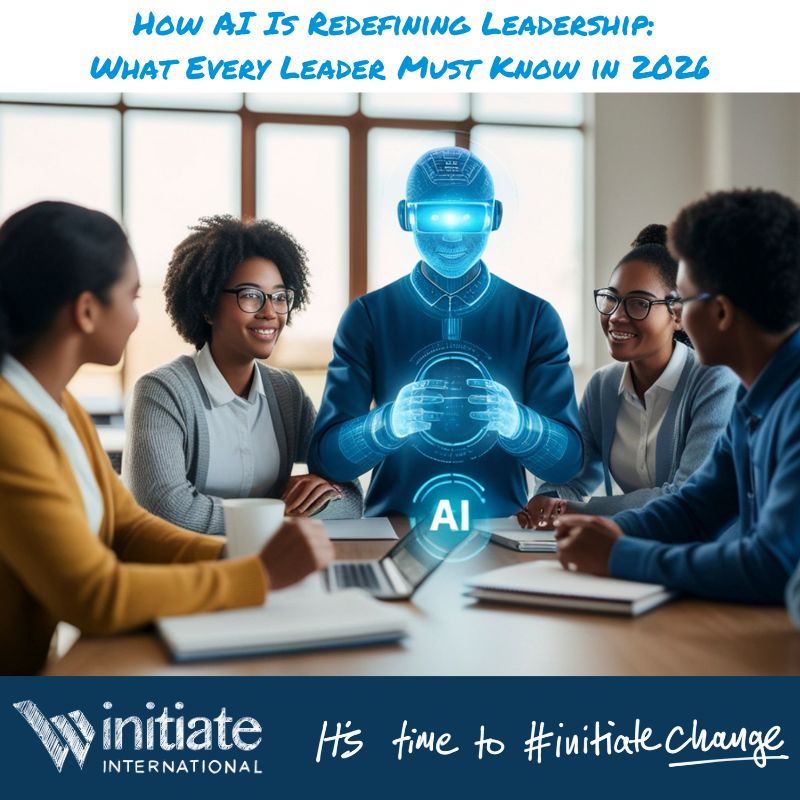
As we move deeper into 2026, the conversation around leadership has shifted from whether artificial intelligence will reshape organisations to how leaders can guide teams through the transformation. AI is no longer a futuristic experiment; it is an everyday operational partner. Yet the role of leaders has become even more human, centred on judgement, clarity, and the ability to build trust in an increasingly digital working environment.
To lead effectively in an AI driven workforce, leaders need to rethink how work is designed, how decisions are made, and how people grow. The future belongs to leaders who understand both the power of technology and the irreplaceable value of human capability.
Redefining Roles and Building Human Centric Workflows
The first major shift is moving away from the old method of dividing work by tasks and instead structuring roles around human strengths. AI can already handle routine processing, data extraction, rapid summarisation, and administrative burdens far faster than any team member ever could. But it cannot replicate qualities such as judgement, creativity, empathy, negotiation, and cultural nuance.
By designing roles around these uniquely human attributes, leaders create a workforce that complements AI rather than competes with it. This requires a clear understanding of which responsibilities should be automated, which should remain in human hands, and how the two interact. This clarity also prevents workflows from becoming fragile or overly dependent on specific tools, especially as AI platforms evolve rapidly. The most effective leaders are building modular processes that can adapt to new technologies without disrupting the entire organisation.
Decision Making, Transparency, and Trust
In AI enabled organisations, the pace of decision making increases dramatically. Leaders no longer have to wait days for reports or analysis because AI can generate strategic insights, scenario modelling, and predictive forecasts almost instantly. But speed can create risk without a structured governance framework.
Forward thinking leaders establish clear thresholds around decision authority. Low risk decisions can be AI supported, medium risk choices require human review, and high risk or ethically sensitive matters always sit firmly with human leadership. This removes confusion about who is accountable and ensures that AI remains a tool rather than an excuse.
Alongside governance is transparency. Employees need to understand when AI is being used, how its outputs are created, and where accountability lies. Many organisations are now adopting internal tagging systems that indicate whether content or analysis originated from AI or a human. This protects quality, avoids legal complications, and builds a culture where AI is openly used rather than quietly hidden.
Skills Acceleration and the Rise of Prompt Literacy
AI proficiency is no longer confined to technical teams. In 2026, prompt engineering has become a core competency across nearly every discipline. The ability to communicate effectively with AI by structuring requests, applying constraints, refining outputs, and validating information is now essential for productivity.
Leaders who invest heavily in AI literacy see teams that operate at a significantly higher velocity. They also reduce bottlenecks and avoid the common trap of having a handful of AI experts while the rest of the organisation lags behind. Cultivating continuous learning cultures is now a leadership priority, especially as roles evolve at unprecedented speed.
Productivity, Outcomes, and the New Performance Culture
AI forces organisations to rethink how performance is measured. When many tasks become automated, traditional metrics such as hours worked become obsolete. Forward thinking leaders shift their focus to outcome based measurement including quality of work, speed to insight, customer impact, and innovation.
AI becomes a genuine productivity multiplier only when people feel incentivised to use it creatively. Some organisations now reward employees who develop new AI powered workflows, automate operational bottlenecks, or improve customer experience using generative tools. This encourages a culture of exploration rather than one based in fear or resistance.
Maintaining Humanity: Communication, Confidence, and Psychological Safety
Despite all the advances in automation, one truth remains constant. People want to understand why change is happening. The biggest threats to AI adoption are not technical; they are emotional. Employees worry about being replaced, becoming irrelevant, or losing control.
Leaders who communicate openly by explaining what AI will do, what it will not do, how roles will evolve, and how team members will benefit create stability and confidence. When people feel informed and valued, adoption accelerates naturally. The most successful organisations also reinforce that AI is a tool that extends human capability, not a substitute for it.
The Future of Leadership Is Technologically Empowered but Deeply Human
In 2026, great leadership is not about embracing technology blindly. It is about combining AI analytical power with human judgement, empathy, and strategic clarity. Leaders who master this balance will guide teams that are faster, more resilient, and more innovative, without losing the trust, transparency, and humanity that make organisations thrive.
